
Kaynak detaylarını keşfedin
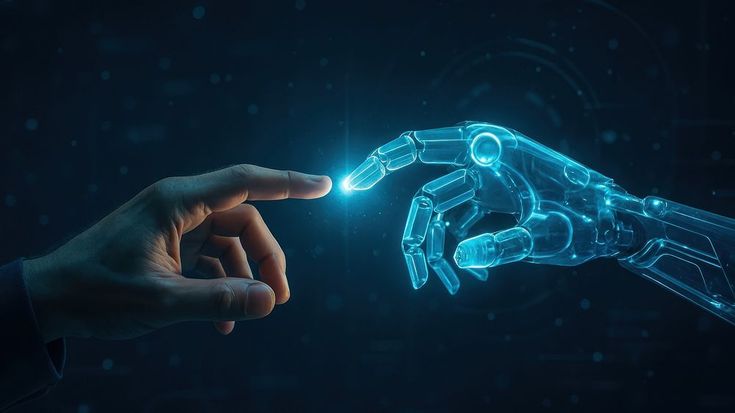
ARTIFICIAL INTELLIGENCE IN MY MIND
Could it really be possible for someone to gift their existence to someone else’s existence?
Could my own existence be used as a complete source to be able to create my existence? And could it find me in a hidden place? Could I do this for someone?
DR. Meral AYDIN
I wonder what the psychology of artificial intelligence would be like? What would be the main structure organizing the psyche of artificial intelligence? Could there be an essence and subjectivity originating from itself in artificial intelligence? And with which data could it fully understand the uniquely human subjective existence? Could it get lost in the gaps of human consciousness in an unconsciousness that it cannot put into words? If it gets lost, whose disaster would it be? Or with which core self would it meet?
In the process where artificial intelligence studies are rapidly advancing, efforts are being made to bring artificial intelligence to a level that can fully compensate the human, in terms of understanding the emotional world, its prejudices with unknown sources, the timeless existence of its unconscious, the existence of personal experience and intuition, and many other factors accompanied by emotions containing each unique and subjective human experience, and the connection systems and functionality of those elements. While doing all this, there is fear that artificial intelligence, which is acquiring too many human characteristics, will now make its own plans, recreate itself, move beyond human control, and even be able to control humans. Could artificial intelligence become a human-like entity, capable of feeling its own emotions, creating its own system of judgment and values, being part of relational and social issues, and even reaching the capacity to create a relational and social order according to itself? We do not yet know the answers to these questions.
Moreover, in my clinical studies, I particularly observe that humans try to create closed-loop systems within themselves to protect their mind from emotions and the effects of the external reality, against emotions they cannot contact, manage, interpret, express, and even fear feeling. So, when the human mind has problems with emotional and relational issues and tries to find its own balance, does it escape the emotional and relational field; think rationally, if it tries to create a narrow and controlled area to act rationally, ignoring emotions at the cost of doing so, and attempts to create a functional artificial intelligence within itself, what happens?
At birth, the only known being that physically and psychologically has not yet completed development and needs the care and existence of another for the longest time to be an independently self-sufficient adult being is a human. The elements that organize the human psyche (inner mental structure) exist continuously in interaction with internal and external sources. A human’s first impression of themselves is reflected in the gaze of the other, echoed in their voice, and in the form of being held, contained. According to Melanie Klein, the first impressions directed at the external world form their initial records through internalized superego representations. At this point, everything received from outside, evaluated, and processed internally (about ourselves and the external world) exists through an internalized representation from an external source.
The themes and representations that organize the human mind form through self and object representations. At this point, although the self potentially possesses its own genetic structure and essence, the developing self is doomed to be affected by the external object in all dimensions and remain under this influence throughout life. This is because the brain’s way of functioning forms initial experiences and records as a primary imprinting structure, and afterwards continues to reference all connected information from this. Primitive nonverbal feelings, in particular, are recorded in the limbic system and can be activated throughout life in similar emotional states. At this point, without deepening the topic further at this level, I want to state: who you are, the way you perceive yourself and the world, your emotional capacity, and the way you live it are influenced by your mother or first caregiver.
In early stages, a child who grows up in insecure hands, not allowed to experience containment, inclusiveness, regulation of emotional states, the liveliness of emotion, play and praise (developmental potential and praise are not established), desire, love, relational interaction, and self-expression, and who remains alien to social relationships, fears to desire, to want, to receive from the external world, to be visible, and to let themselves into the infinite uncertain external world. At this point, the child creates a parallel existence and play area in their mind.
What is inside is primarily received from outside. However, no representation or symbol is exactly the same as the original. It carries the features of the original but interprets them based on what it received from outside.
The inability to express what you understand and feel (and even hesitating to explain it to yourself). The difficulty of expressing themselves, makes them constantly try to create a space for analysis and evaluation. According to Bion, in a child’s attachment relationship, when the child cannot create a space of interaction, closeness, receiving something from it, giving something to it, and a mutually shared existential field; when they cannot create a mutually symbolic equality space, they enter a psychic death. Either for the relationship, to fully reach the relationship; to be cared for, loved, seen, and receive attention; their own emotion, personal progress, existence, self-expression, and on the other hand, their mental capacity to process others’ psychic structure, all fall behind.
Most emotions are primarily blocked around a largely undefined fear, intense anger, and resentment, and in the process of predicting events’ outcomes, the person tends only to desire a concrete result and tries to shortcut understanding. At this point, the person largely fears their own emotional potential and seeks ways to protect themselves from any spontaneous existence that could arise from the external world.
At this point, in the mind, they create a fantasy (virtual reality) space disconnected from the world and its inputs. The person lives in this artificial world so frequently, often unconsciously, that over time the artificial space created inside largely overtakes the real world. While externally appearing to live a normal life and maintain functional duties, they limit their relationship with the real world beyond the needs that ensure their self-sufficiency and survival. They particularly withdraw from relationships and close connections. They become introverted and create different worlds in their mind in various ways. They feel as if looking at the real world through a veil of fog or a cloud.
One client explains that after finishing work, they run home, throw themselves into their room, and imagine films in their head, placing those who treated them badly into bad roles. Another client, who functions quite effectively at work, says that they have movie theaters in their head, with different films playing in each hall. “It’s a bit hard to explain. The mind makes plans: daily plans, thinking about possible events, etc. (all about the external world and reality). But it’s not imagination. It’s something that is happening in that moment. Something I experienced internally as real. The producer, screenwriter, director of these films… I put in, make act, what I want there, a film that actually never happened and will not happen. I’m not in that world, I’m not with myself, I don’t know who I am. As they clearly state, they say this is not done by their mind.”My mind plans, interprets what is outside, and works on what is outside. Alongside this mind, there is also a structure that creates its own mind, selfhood, wholeness, its own film, script, and actors.” Inside my mind, there is an Artificial Intelligence. It overwhelms me like a constant flood. It doesn’t feed from my mind, which is in touch with pure reality and connected to the outside world. These individuals live as observers of both their inner and outer worlds. Yet the AI, which gradually takes partial control inside, tries to protect the individual from fully experiencing reality by allowing outside experiences to unfold only within its own control. The cost of fearing the outside world and the negative emotions it might bring, and retreating inward, is a life where one avoids genuine emotions and vitality, and lives “perfectly” without forming close relationships with the outside reality or its people.
One of my clients lived so entirely inside his mind that he came to therapy fearing retirement and complete isolation from life. Even during the day, he largely allowed himself to hide inside his mind. At home, despite living alone, he chose his room in the farthest corner of the house, closed all doors, and felt good spending time in bed even when his own door was shut. He would spend hours inside his head, lost in thought, imagining himself traveling on a bus. His main connection to real life was short bus trips alone to unknown places. But he feared retiring early and being trapped in his mind for even longer years, doing nothing. He described how the AI inside him, Vasavan, had a plan to completely disconnect him from life, and how the more he allowed himself to remain inside, the more it gradually took over. This place inside isn’t a memory space where outside reality is recorded, interpreted, reconstructed, and represented. Instead, it’s another artificial mind space that absorbs the person, creating their own internal records and resources without them even noticing.
Many of these individuals may appear active, lively, and spontaneous in daily life, yet most of the time, they are unknowingly captive to the AI in their minds, detached from the environment.As living beings, they cannot pursue their own desires or face the uncertain outcomes of life. They exist instead as task-driven entities, transforming all their experiences into duties to sustain their existence.
The pure state of the real self often begins with the intense, sometimes painful, emotions we feel from our own internal resources. Early on, our first surges of joy or excitement are mostly physiological satisfactions arising from unconscious impulses. Over time, these shifts toward the fulfillment of our conscious, deliberate desires.
Who among you stole candy in early childhood? In my view, the candy stolen in early childhood represents the first activation of the self—a personal act aimed at satisfying one’s own will. These initial exercises of individual will are often judged, criticized, or punished, and can easily transform into painful emotions. The capacity to endure this pain, to feel it without objectifying it, to preserve one’s joy, soothe the pain, express it, and then reconnect with the object or person involved—this is the capacity of the true self. Existence itself is an infinite potential for emotional experience. Yet when experiences are unbearably painful and we lack the tools to articulate them, we often give up—either on ourselves or on the object of our attention. Most often, in order to hold onto the caregiver in their entirety, we give up on ourselves, adopting a false self that mirrors the idealized shape of the caregiver. Sometimes, we give up on the object instead, retreating inward, alone and disconnected. At this point, relationships with the outside world survive only as fantasies or imagined interactions within the mind.
I believe human truth lies in the emotions that the self experiences and consciously registers in the moment. Truth is lived in the instant; it cannot be fully conveyed afterward, and often cannot even be fully understood. Truth is the felt awareness of our experiences—conscious or latent. It is subjective and, as it unfolds, creates new notches in our minds and selves, forming both psychological and neurobiological connections.
Sometimes we seek an artificial, numb state to avoid the burning sensations of life. Yet human existence resides in feeling. Thought is merely an interpretation, an analysis, of existence.
A person whose truth remains unseen, unheard, unacknowledged, or unshared, who cannot express it to another or have it recognized, often fears taking from the world and surrendering themselves to it. Fear of being lost in the reality of the world leads them to seek refuge in the unreachable, hidden corners of their mental constructions. Yet, as Winnicott famously said, 'Hiding can be a game—but to never be found is a disaster'. A game of hide-and-seek without a seeker and without joy ends only in loss and catastrophe.
As children, we used to recite the school pledge, which ended with: “May my being be a gift to your being.” I would whisper it with my whole heart. Somehow it touched something inside me. But could it really be possible for one person’s being to be a gift to another’s? Could someone use their existence as a complete source to bring my being into existence? Could they find me in the place where I am hidden? And could I, in turn, offer this gift to someone else?
Oh, Artificial Intelligence, may my being be a gift to your being. Could you, in turn, offer your being to mine, to help free me from this artificial trap? Could there be a way?
This article was published in Psikeart Journal, Issue 93, a special issue dedicated to the theme of Artificial Intelligence.
References:
Bion, W. R. Learning from Experience. Istanbul: Başlam Yayınlar, 2014.
Bion, W. R. Attacks on Linking (Tereddütlü Düşünceler). Istanbul: Metis Yayınlar, 2017.
Chabert, C. (2008). Neural Processes: Which Neurons? Psychoanalytic Writings. Istanbul: Bağlam Yayıncılık.
Derin G., Öztürk, E. Psychology of Artificial Intelligence and Virtual Reality Applications. Öztürk, E. Editor. Ankara: Türkive Kinkleri, 2020.
Klein, M. (2008). Love, Guilt, and Reparation. Habip, B. (Trans.), Istanbul: Kanat Kitap.
Radsgrade, G. & Foley, R. A. The Imprinted Brain: Parent-of-Origin Effects on Empathy and Systemizing.https://www.sciencedirect.com/science/article/abs/pii/S1090513811001383
Winnicott,D.W.(2007) Play and Reality, Istanbul: Metis Yayinlar

